
From Enoch Powell to Mad Jack Mytton: Infamous MPs who won a General Election in the West Midlands
A General Election looms and from it will emerge, hopefully, politicians who work tirelessly for this region, whose endeavours for their constituents will, in later years, be remembered with pride.


But we have had our share of MPs who have gone down in history for the wrong reasons, who have created unwanted headlines. Today we look at five who chased political fame yet achieved infamy during a General Election.
JOHN “MAD JACK” MYTTON (Tory, Shrewsbury)
Mytton, the son of Shropshire gentry, emerged from the womb with a silver spoon wedged in his mouth, on September 30, 1796. Not long after taking his first steps along the corridors of Halston Hall, Whittington, near Oswestry, he developed an appetite for destruction. An insatiable appetite for destruction.
Mad Jack was not only this region’s worst Member of Parliament, he is among the most inept in this nation’s history.
He secured his seat by offering voters £10 notes. The astronomical sum spent on Mytton’s campaign was not money well spent. The good folk of Shrewsbury certainly deserved better.
In all, he spent only 30 minutes in the House of Commons, finding the debate dull and hard to follow. It was not for him and when Parliament was dissolved in 1820, Mytton decided not to stand in the forthcoming election.
Mytton was, quite frankly, off the rails, his cruel practical jokes and potentially fatal stunts fuelled by an eight-bottles-a-day addiction to port.
The numerous tales of Mytton’s excess are myriad and many reveal a total disregard for the man’s own health and safety. “Not only did he not mind accidents, he positively liked them,” a friend confided.
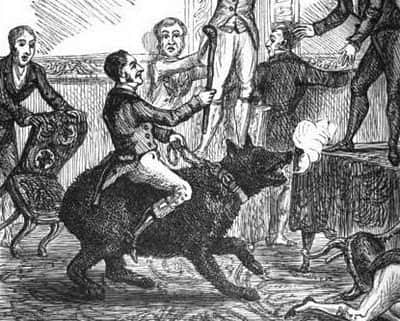
He deliberately upended a horse and carriage – injuring a passenger – so the friend could experience the thrill of the spill. He suffered severe burns when setting fire to his nightshirt to cure hiccups. It worked. He entertained dinner guests at his stately home by riding a bear into the room. Those diners fled in terror when Jack dug his spurs into the beast, causing the enraged animal to rampage.
Mytton was also a serial 'flasher' with a taste for naked duck hunting and an overwhelming desire to rip his clothes off when overcome by the excitement of fox hunting.
Mytton died, having squandered his vast fortune, in debtors’ prison aged only 37. It’s a surprise he lived that long.
JABEZ BALFOUR (Liberal, Tamworth)
Some political careers are destroyed by carnal desire, others by corruption. Balfour, who served Tamworth from 1880 to 1885, fell into the latter camp.
And he paid a heavy price for his vice.
In 1892, Balfour, by then MP for Burnley, executed a swindle that ruined thousands of investors. He was at the helm of a number of companies, including the Liberator Building Society, at the centre of the scam.
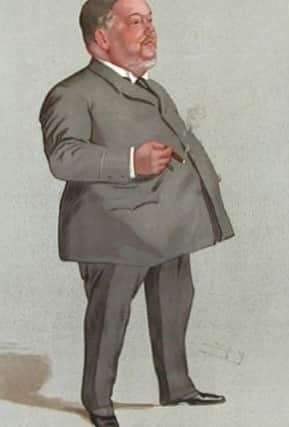
Rather than advancing money to homebuyers, the society presented it to property companies for one purpose: to buy homes – at a sky-high price – owned by Balfour. His firms collapsed and, with Scotland Yard on his tail, Jabez fled to Argentina.
There the police adopted tactics that would do The Sweeney proud. Fed up by the red tape and wrangling surrounding Balfour’s extradition, Inspector Frank Froest effectively kidnapped his target in 1895, bundling him on a train and boat back to Britain.
At the Old Bailey, Balfour was sentenced to 14 years' “penal servitude” and endured a very tough time in Portland Prison until his release in 1906.
Jabez died on February 23, 1916, aged 72. He met his maker while travelling on a train.
NEVILLE CHAMBERLAIN (Conservative, Ladywood and Edgbaston)
If Chamberlain was to be judged solely for the work he did in his constituencies, history would declare him a fine politician, a man who cared.
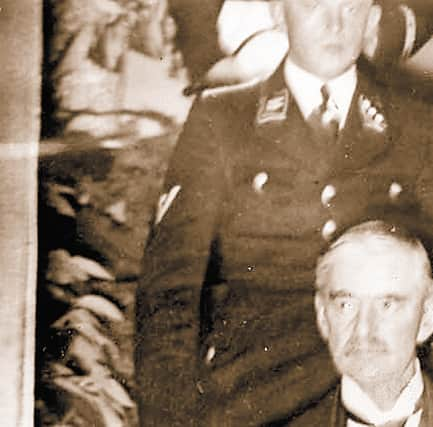
Unfortunately, his legacy has been indelibly stained by his tenure as Prime Minister. In truth, Chamberlain’s legacy has been indelibly stained by one man, Adolf Hitler.
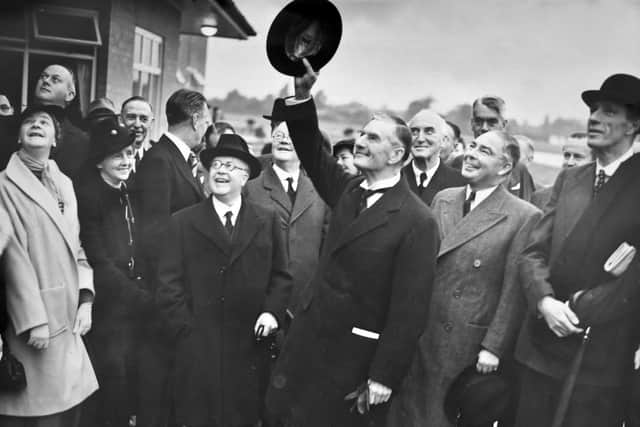
He is remembered as the PM who was bluffed by the evil tyrant, then buckled to him. Immediate post-war opinion was Chamberlain rolled over and let the Fuhrer walk all over him.
Yet, Chamberlain’s desperate desire to avoid war should be viewed in the context of that time. Britain had still not washed clean the Great War blood and no one wanted another conflict. When it seemed Chamberlain had succeeded in securing peace, he was applauded.
Chamberlain’s great sin was not cowardice, it was misjudgement. He misjudged Hitler. He believed he was honest, trustworthy and equally opposed to violence.
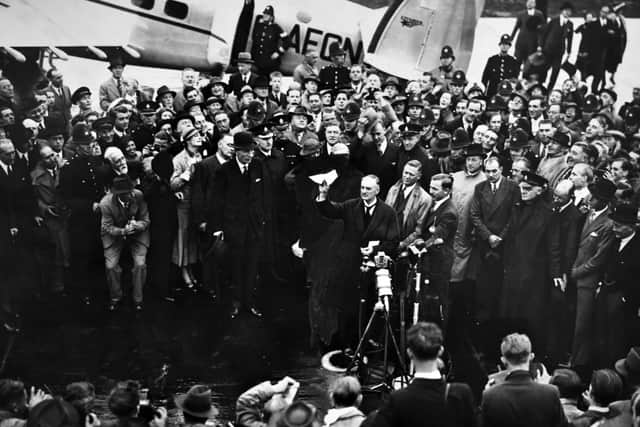
All of the social benefits Chamberlain delivered have been eclipsed by that one moment, on September 30, 1938, when, holding aloft a sheaf of paper, he declared: “Peace in our time.”
That “peace” came at a high price. It was secured, following a meeting between Chamberlain and Hitler, at the expense of Czechoslovakia’s German-speaking Sudetenland. Our Prime Minister and other European leaders basically handed over the region on a plate.
And that subservience did nothing to halt the Third Reich’s vile plans.
On September 3, 1939, Chamberlain told the nation: “This country is now at war with Germany.
“It will be the evil things we will be fighting against – brute force, bad faith, injustice, oppression and persecution.”
Birmingham historian Professor Carl Chinn believes Chamberlain has been sorely misjudged. “He was an exceptional politician on the local and national stage,” he said. “An honourable and patriotic man who put duty above himself.”
Rather than bow to Hitler, he bought the Allies time to prepare for the war, Carl argued.
Chamberlain was said to be broken by his blunder and died, from bowel cancer, on November 9, 1940, aged 71.
JOHN STONEHOUSE (Labour, Wednesbury and Walsall North)
Stonehouse, a man who gave the Black Country a Parliamentary voice from 1957 to 1976, pulled off the greatest of all political deceptions.
He faked his own death or, as the tabloids stated at the time: “did a Reggie Perrin”. That epitaph referenced 1970s comedy series The Rise and Fall of Reginald Perrin in which the main character left his clothes bundled on a beach, then disappeared.
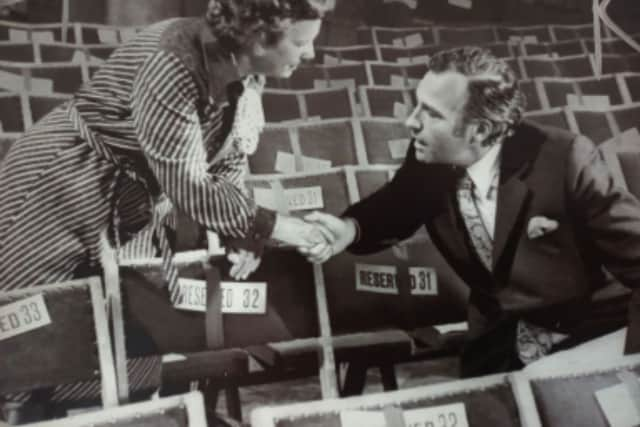
Stonehouse did pretty much the same – and, 50 years after the RIP ruse, his plan remains utterly astonishing.
With the Department of Trade and Industry scrutinising the books of several of his companies, the politician decided to play dead.
Stonehouse epitomised the old-school description “cad”. Apart from his flare for creative accounting, the suave, dapper MP was a serial womaniser.
On November 20, 1974, he attempted to hoodwink public and press into believing he had drowned off a Miami beach.
Initially, he succeeded, with Stonehouse’s obituary appearing in daily papers.
The news of his demise was decidedly premature.
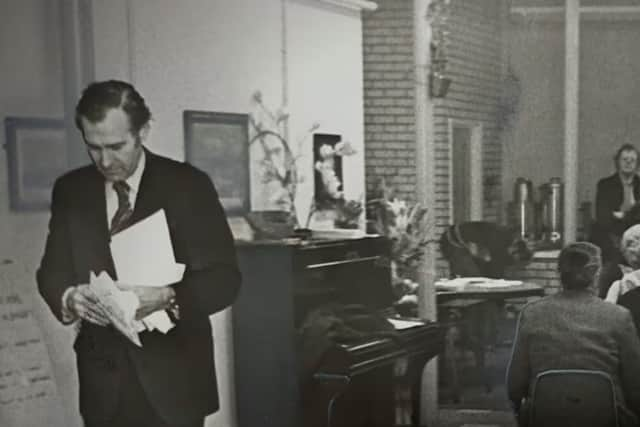
In reality, Stonehouse planned to begin a new life, with secretary and mistress Sheila Buckley, in Australia. There, he took the identity of two dead constituents, Joseph Markham and Clive Mildoon.
The plot unravelled very quickly for Stonehouse. When arrested in Melbourne on Christmas Eve, 1974, detectives believed they had found missing earl Lord Lucan.
Their mistake became apparent when, on request, Stonehouse dropped his trousers. Lucan had a prominent scar on the inside of his right thigh.
Back home, the MP blamed his behaviour on mental breakdown – a defence that did not prevent him receiving a seven-year sentence for fraud.
He told the House of Commons: “I assumed a new parallel personality that took over from me, which was foreign to me and which despised the humbug and sham of the past years of my public life.”
Stonehouse’s life following his release in August, 1979, was dogged by serious cardiac problems and he died, aged 62, on April 14, 1988, following a massive heart attack.
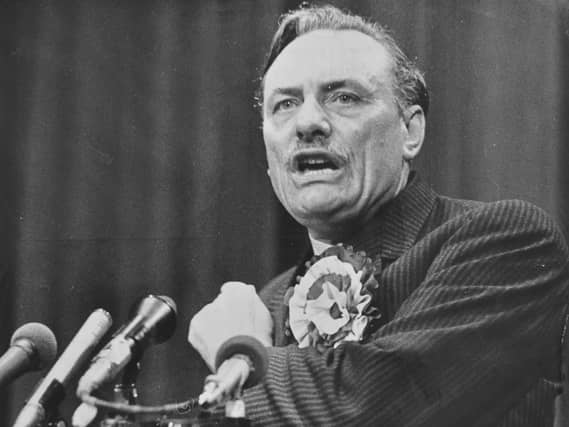
ENOCH POWELL (Conservative, Wolverhampton South West)
Twenty-six years after his death, Powell remains one of the most divisive figures to emerge on the political landscape.
Twenty-six years after his death, there remain devotees who insist: “He was right, we should’ve listened to him.”

He was, without doubt, a maverick who appeared to gain contentment from controversy. He turned on his own Conservative Party in the 1974 General Election and won the South Down seat for the Ulster Unionists.
But 56 years after his notorious “River of Blood” speech, the words are exposed as divisive, harmful, even hateful.
And Powell knew exactly the storm he was about to unleash when addressing those gathered at Birmingham’s Midland Hotel on April 20, 1968.
Before the speech, Powell told Express & Star editor Clem Jones: “I’m going to make a speech at the weekend and it’s going to go up ‘fizz’ like a rocket. But whereas all rockets fall to earth, this one is going to go up.”
He quoted a letter from a constituent that revealed the plight of an elderly woman in Wolverhampton who had refused to let rooms to “non-whites”. She had been dubbed a racist and excrement pushed through her letterbox.
With eyes scanning the room, Powell announced: “As I look ahead, I am filled with foreboding. Like the Roman, I seem to see ‘the River Tiber foaming with much blood’.”
The line was from Virgil. Its delivery volatile.
The speech was denounced as “evil” by the Times and led to Powell’s sacking from the shadow cabinet.
But the uncomfortable truth is it received widespread support and made Powell one of the most popular politicians of the time. He was hailed a hero of the white working class.
A Gallup Poll carried out only days after the MP’s words exploded onto the public arena showed only 15 per cent disagreed with him.
Only April 23, 1,000 dockers marched on Westminster chanting: “Enoch here, Enoch there, we want Enoch everywhere.”
Other demos followed, leading Conservative politician Michael Heseltine to declare that if Powell had stood for Prime Minister he would’ve won by a “national landslide”.
Was Powell, who died in 1998 aged 85, a visionary or a verbose torch-bearer for the racism that riddled 1960s Britain?
On the 50th anniversary of his speech, TUC Midlands general secretary Lee Barron told me: “Enoch Powell lost. Powell’s vision of ‘rivers of blood’ has clearly been rejected. Our communities are a vibrant, tolerant and open society that is welcome to all societies.”
Stand Up To Racism’s Brian O’Sullivan said: “Powell spoke of immigration as an evil and used his speech to try to whip up racial hatred. But here we are and people from different communities and religions work and live together and we will not let racism divide us.”
Comment Guidelines
Iconic Media encourages reader discussion on our stories. User feedback, insights and back-and-forth exchanges add a rich layer of context to reporting. Please review our Community Guidelines before commenting.